What Tracking Hurricanes Can Teach Us About Chronic Pain and Illness
Tracking the Tropics, Tracking Yourself
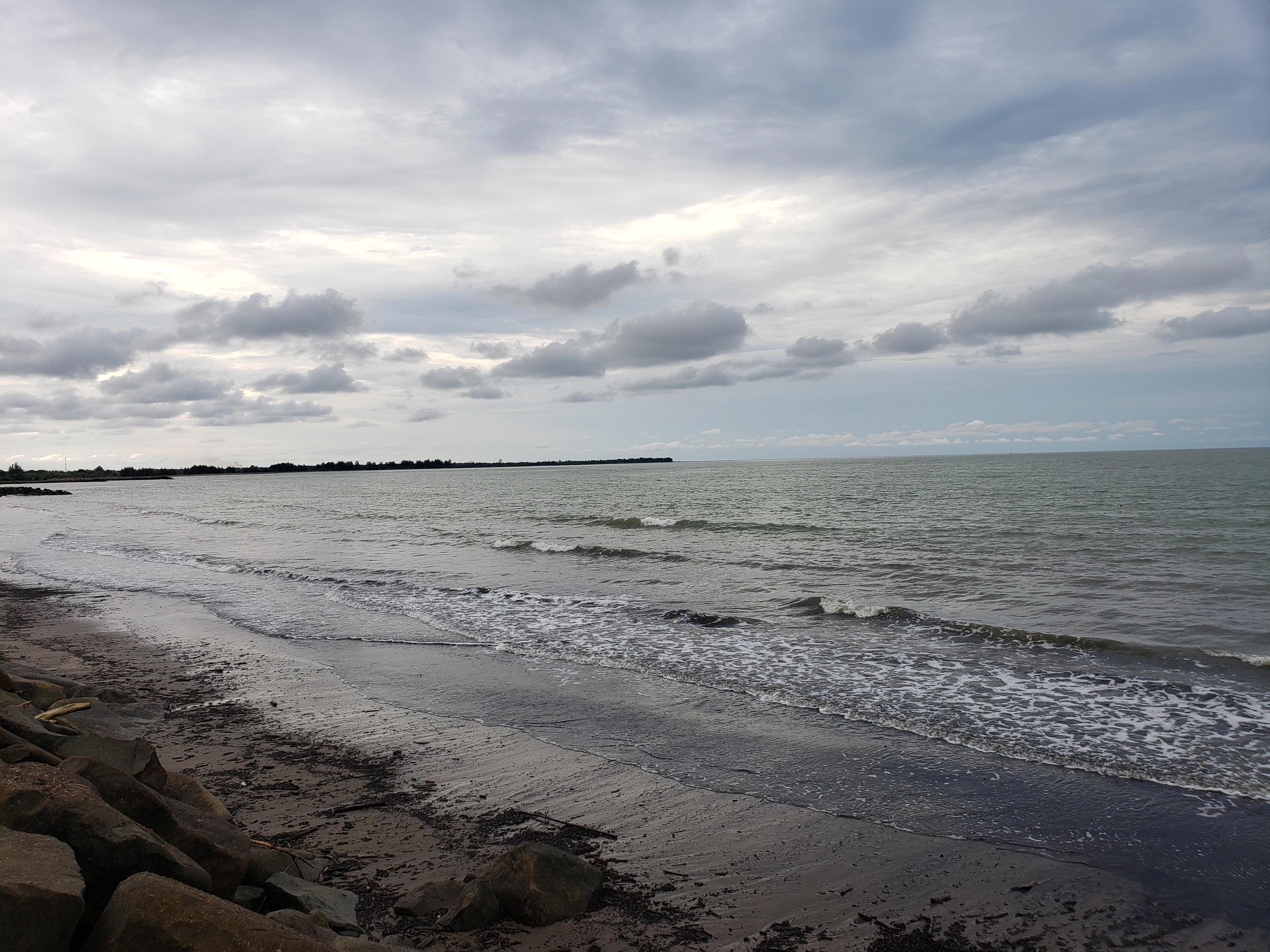
If you live near a coastal region, you already know the ritual.
This time of year, you check the tropics the way you check the weather before deciding what to wear. A tropical wave rolls off the coast of Africa. You glance at the spaghetti models. You watch the cone of uncertainty and wonder if this is the one that will need your attention, or if it will fall apart somewhere over open water and never become anything at all.
Hurricane season brings a certain background hum with it. A quiet, ongoing awareness that something could be forming, even on a clear, sunny day.
If you're also living with chronic pain or chronic illness, that hum is not new to you.
You already know what it feels like to watch something closely. To notice the first small sign of a system forming, in your body instead of the Gulf or the Atlantic, and wonder if this is the one that's going to need your full attention.
There is something worth borrowing from the way storms are actually tracked, and it might help with both.
Meteorologists don't try to stop a tropical wave the moment it forms. They don't panic at every wobble in the forecast models. They watch. They gather data. They update the picture as new information comes in. And they hold real uncertainty, genuine not-knowing about the exact path, without that uncertainty stopping them from tracking closely and preparing well.
Good meteorologists do something specific with all that tracking. They don't just gather data. They translate it. They know how to say a storm is worth watching closely without putting an entire coastline on high alert before there's any real reason to be. They know the difference between here's what we're seeing and evacuate now. Staying calm while staying informed isn't incidental to their expertise. It is a large part of what makes them experts.
You can become that same kind of expert on your own body.
Not by knowing every possible thing that could go wrong. But by learning to read your own signals the way a meteorologist reads a storm, closely, calmly, gathering information without immediately jumping to the worst-case scenario. The people who track storms professionally aren't less informed than someone who panics at every update. They're more informed. And that information is exactly what lets them stay calm.
The same can become true for you.
A sensation forms. Tightness, fatigue, an ache, a wave of overwhelm. The instinct is often to immediately forecast the worst path. Is this going to become something bigger. How bad will this get. What does this mean.
But a storm being tracked doesn't require an immediate forecast of doom to be taken seriously. It requires attention.
The same is true for a sensation in your body.
You can notice it. You can watch where it is and whether it's shifting. You can stay present with it without needing to know exactly where it's headed before you're allowed to pay attention.
This is what somatic tracking actually is. Watching with curiosity, not with alarm. Staying present with what's happening in your body the way you'd watch a system on the radar, closely, attentively, without needing certainty about the outcome before you're willing to look.
A storm that's tracked well doesn't necessarily become less real. But it becomes less frightening, because you are no longer caught off guard by it. You've been watching. You have information. You are not bracing against the unknown, you are tracking the known, moment to moment, as it unfolds.
The same can become true for the sensations you carry.
Here's one small way to try it.
The next time you notice something forming in your body, treat it the way you'd treat a system off the coast. Notice it without immediately deciding what it means. Watch whether it's intensifying, staying steady, or beginning to weaken. Stay curious rather than certain. You don't need the full forecast right now. You just need to be tracking.
And just as with a real storm, if your body needs real attention, medical care, rest, hydration, support, please give it that. Tracking with curiosity is not a replacement for taking care of your actual needs. It's a way of relating to sensation that can exist alongside good care, not instead of it.
This hurricane season, as you watch the tropics the way you always do, you might notice something familiar in it.
You already know how to track something closely without panicking.
You've had practice at that.
It turns out, it's a skill your own body can use too.
If you're navigating chronic pain, chronic illness, or the kind of stress that lives in your body, this is the work I do in my private practice. I offer virtual therapy for adults across Florida, with a few in-person spots available. You can learn more about working together [here].
Mindfully Yours,
Sara G. Graff, LCSW
SW7007
727-479-6041