How to Recover After a Chronic Pain or Illness Flare
After the Storm Passes
If you live somewhere that tracks hurricane season, you know what happens after the storm too.
The wind dies down. The rain stops. Blue sky comes back, piece by piece. But nothing returns to normal right away.
Power might still be out. Roads might still be blocked by fallen branches. Cleanup takes days, sometimes longer. Nobody expects a coastal town to be fully back to business the moment the storm passes overhead. Everyone understands that recovery has its own timeline, separate from the storm itself.
The same is true for the storms that move through your body.
A flare eventually eases. The pain settles. The fatigue starts to lift. And often, in that exact moment, you feel pulled to pick up exactly where you left off, before the storm hit. To catch up on everything you missed. To prove, to yourself or to everyone around you, that you are fine now. That the storm has passed, so life should simply resume right where it left off.
But a storm passing is not the same as recovery being finished.
You already know how to track a system forming. You've built the kit that helps you get through it. This final piece is the one that often gets skipped. What happens once it passes.
The exhaustion that lingers after a flare, even once the worst of it has cleared. The grief of lost time, the plans missed, the version of the week you had hoped to have. The quiet guilt of feeling behind, as if you should already be caught up by now.
None of that means you are recovering wrong.
It means your nervous system is still doing the after-work. It is cleanup, in its own way. Your nervous system needs time to settle, the same way a coastline needs time after the water recedes.
A different kind of recovery can begin with something smaller than catching up on what you think you've missed.
Instead of asking, how quickly can I get back to everything, you might gently ask, what does my body actually need right now, to keep settling.
This kind of recovery might mean staying slower than the day seems to call for, even after the flare has technically passed. It might mean forgiving yourself for what didn't get done. It might mean simply letting the recovery take as long as it takes, without rushing it to prove anything to anyone.
That slower pace is not falling behind. That patience is what real recovery looks like from the inside.
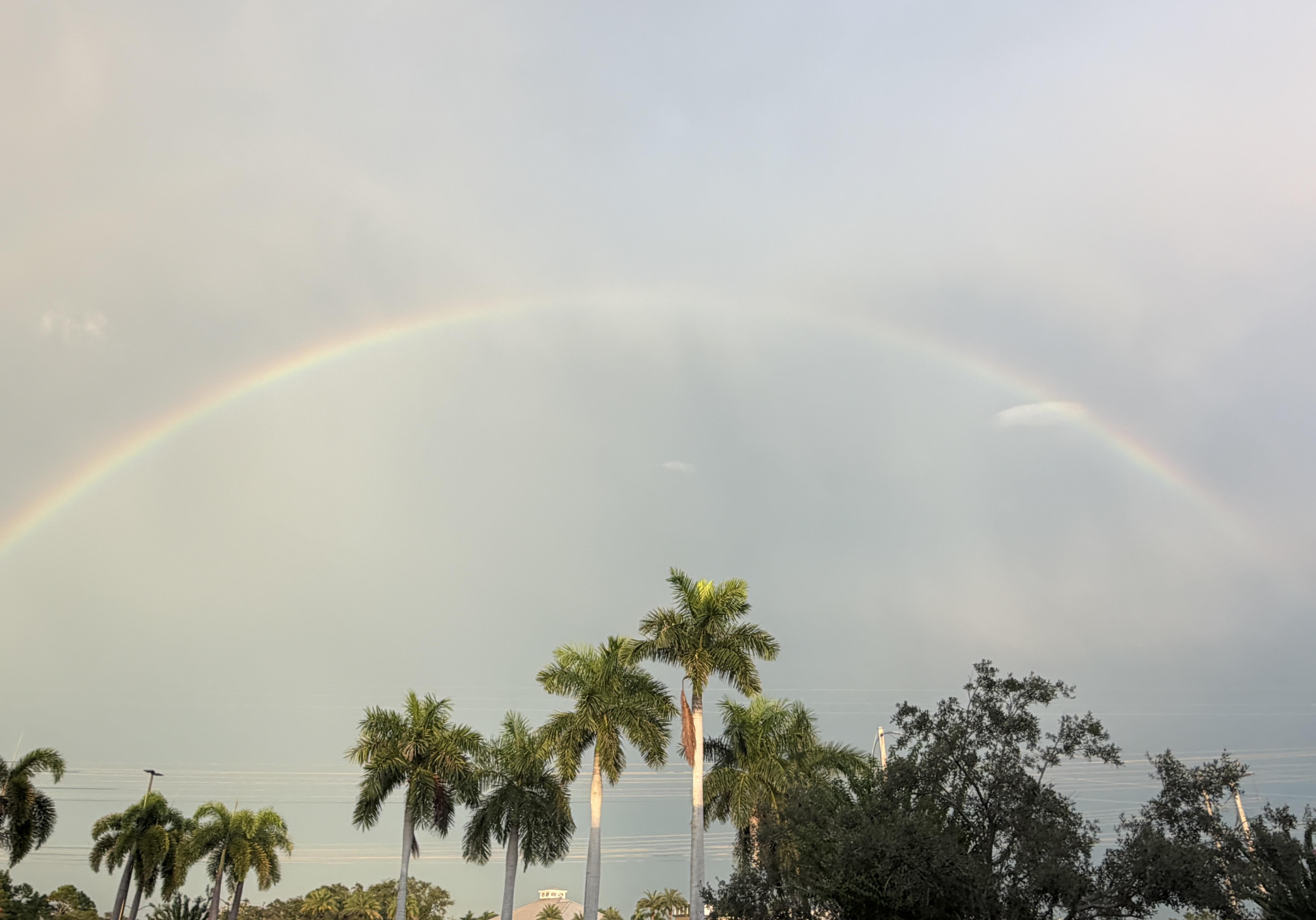
Sometimes, after a storm passes, something else shows up too. A stretch of quiet. A softer sky. Every so often, if you are paying attention, a rainbow.
Not because the storm was worth it. Just a reminder that something gentler tends to follow, even after something hard has moved through your body.
This hurricane season may have felt long in your body, in the storms themselves and in everything that comes after them. Be gentle with yourself in the aftermath too.
You are allowed to take your time recovering from your storm.
If you're navigating chronic pain, chronic illness, or the kind of stress that lives in your body, this is the work I do in my private practice. I offer virtual therapy for adults across Florida, with a few in-person spots available. You can learn more about working together [here].
Mindfully Yours,
Sara G. Graff, LCSW
SW7007
727-479-6041